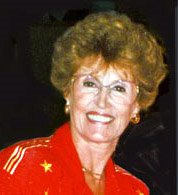
A BROAD ABROAD IN IRAN: One Strappy Sandaled Foot Ahead of the Mullahs (during the revolution).
It has taken me a few years go get this off the ground, but off it came and now ready for the editing to start. I would venture a guess that it will take 9,222,034 new drafts, but, hey, what else do I have to do.
Lots of interest coming out for the book, which Iran has spurred on by getting itself into hot water; bless Ahmadinejad’s little black heart!
Writing this book, and reliving everything that happened to me in the 70s, brings back some horrific memories as well as some hilarious ones. I seem to see past problems as humorous after a few years have passed. Hopefully my readers will see humor as well.
The Iranian people that my family dealt with were welcoming and kind; the others that seemed to want the country back in the Old Testament pages, well….they’re still there.
My book starts with my husband’s proclamation that we are to move to Iran for eighteen months for a great job offer. He leaves, and six months later we join him. That six months follows me through trials and tribs, handling four children (two teenagers) and a large house that needs to be sold before leaving the country.
We finally get to Iran in July, where I face culture shock and intestinal shock, intrigue and stoning. But, you can read the synopsis on my website, dodiecross.com/books
More to come……..
Saturday, August 13, 2011


Tuesday, July 13, 2010
TO BLOG OR TO WRITE?
That is the question. I’m really getting into my Iran book, trying desperately to get chapters done. I’ve left my blog sitting since June because I don’t want to take the time out from writing. I’m up to 17 chapters now. The weather is in the 100s and too hot to stick my head out of the house so that saves me some time for writing.
However, I joined a writer’s Read/Review website: “The Next Big Writer” which has helped immensely. As a member, you must “read and review” other author’s writing to gain points to post your own writing. It’s a pretty slick deal. The people who have given me numerous reviews are incredible! That’s doesn’t mean that everyone gave me great reviews; it just means that they were well-versed in HOW to review. Most caught glitches that I did not pick up in my reading, reading and re-reading. Some caught glitches that others missed, however, the ones that missed them found glitches that the first ones missed. Some have offered ways to change a phrase, delete a passage, change POV, get active instead of passive, show don’t tell, all the things a writer knows, but fails to pick up on their own work.
I would recommend any writer who is working on a manuscript or poem to join this group. It’s like attending a Read and Critique class, but you get to stay home in your jammies or undies while hundreds of eyes are reviewing your work.
The website is: www.thenextbigwriter.com
For all you writers, give it a try.
Here’s an excerpt from a chapter I’m working on now in: A Broad Abroad in Iran: One Strappy-Sandaled Foot Ahead of the Mullahs.
JULY, 1977
CHAPTER 16
THE INCREDIBLE ISFAHAN BAZAAR
Noise, Odors and Treasures
“Don’t go to the bazaar without me.”
My husband was hyped up about taking us to this incredible place. “I think you might get a bit overwhelmed, and I want to see your reaction.” I wondered, did he expect me to scream, cry, jump up and down? I admit I am a very excitable person, so maybe all three. He’d told us about the bazaar in some of the letters he’d sent home, but I had no idea what awaited me.
The following Friday we set off on our big adventure. As we approached the square, I could hear an unearthly clamor wafting out from the entrance and was a little apprehensive about entering. I saw that some merchants had their wares lined up around the outside walls of the great edifice, and thought quite clever—no overhead, and they could make a sale before the merchants inside had a chance to corral the tourists.
Hand-blown glass vases, bowls and platters, copper and brass pots gleamed in the bright sun. Exotic-smelling spices and scents called to me. I was eager to buy it all. “Hold off, Earl said, “wait until we get inside and see everything they’ve got.” He herded us toward the entrance.
Then we stepped inside.
Oh, what a glorious, exciting place! But filthy!
Eardrum-piercing Persian and American music blared forth from every nook and cranny, as it mixed radios, tape decks, and the worst offenders of all, the loud speakers which were affixed to the earthen walls. All came together in one huge reverberation. If I concentrated hard enough, I could make out some Neil Diamond, The Beatles and even some Rod Stewart, while Googoosh, Iran’s most famous female singer in the 70s, wailed her disco sounds in the background. All this music was mingled with a multitude of babbling voices as women in chadors, hell bent to get the freshest produce, pushed and shoved against each other, while merchants or “bazaaris” yelled out their prices. It was a cacophony of music, braying donkeys, baaing goats, clucking chickens, ugly sheep and snot-nosed, howling kids, who I might add were all underfoot and running wild. And I was enthralled!
The air was at once fetid and pungent, sour, sweet, and then disgusting. At times the odors were overpowering: meat that should have been tossed a week earlier, along with rotting fruit and rancid oils. Added to this assault on the newcomer’s nose was the rank smell of urine that played in the mix as men chose to relieve themselves against any wall close enough. The worst assault was the occasional smell of animal excrement, dropped at will, and seemingly always underfoot.
The body odor that inundated the bazaar was insufferable, facilitated by the extreme dry heat outside, the humid air inside, and the mass of humanity. I had the distinct feeling that some of that odor might have attached itself to my clothes, so every now and then I’d do a clandestine sniff.
Denny, my ten-year-old son, was intrigued by the animals that roamed freely, while Lauri, my twelve-year-old daughter, hung next to her father, terrified of the leering men. The merchants, men of all shapes, sizes, and colors, wore dark suit coats over sweaters, dark dusty pants and worn down shoes or sandals. Even I was a little wigged out by them. Her father laghed at her fears, “Honey, these men will only keep you prisoner until you’re 20. Don’t be so afraid.”
She didn’t think it was funny. “Mom, it stinks in here.”
I had to agree with her. It was hard to carry on a conversation while breathing through my mouth. I knew better than to use my finicky olfactory glands in this place. “Well of course it does,” Earl said. Haven’t you seen all the animals running around?”
“No, I mean, B.O.”
Denny piped in: “It’s not just B.O., Dad, it’s donkey poop. I just saw a man step in some and he just kept walking.”
Earl was weary of their complaints. He’d been excited to show them the bazaar and all they’d done was worry about everything. “Hey, this is a cultural lesson for you two. There are people here from all over the world. Forget about smells. Try to learn something from it. This is how they traded long before there were any stores. They’d carry all this stuff you see in here with their caravans and head out to trade with other countries.”
“No way, Dad,” Denny said. “You mean on camels across the desert?”
“Yep. The same way Marco Polo got around.”
“Marco Polo? I thought that the name of a pool game.”
I made a mental note: Get son a history book.
As we pushed and shoved our way along, I kept a firm grip on Lauri’s hand, while Denny, begrudgingly, let Earl hold his. It was rather spooky. It seemed that most of the men looked at me with disapproval in their eyes. Did I imagine it? I don’t think so and it ticked me off. I’d made a point of dressing modestly; a long blouse over jeans. Yet, I could feel them undress me with their eyes. They made no secret of it. I was pissed and asked Earl to get in their faces.
“Really, Dodie. This is their country, and I’m not going to start an International incident because some old geezer finds you nice to look at.”
“It’s more than just looking at me,” I said. “They’re gawking, and looking right at my chest.”
“Can’t blame ‘em.”
“The next time we come, I’m wearing a Levi jacket. Let’s see them check out any body parts then.”
“Not me,” Lauri said, “I’m never coming back to this scary place.” And she didn’t. She much preferred going uptown to the gold stores and carpet shops.
I found it intriguing. Everywhere I looked was something I knew I couldn’t live without. Beautiful hand-woven carpets were everywhere; some hung from wobbly wooden racks on the earthen walls, some piled on the dirty floors, while peddlers cajoled you to buy the carpet of your dreams: “Special made for you, Ma-dam.” Picture frames made of camel bone with intricately carved stories of Persia’s history, then filled in with India ink from a cat-whisker brush.
After I’d recovered from the shock of the noise, crowds and odors—wet Sherpas came to mind—I loved it. How could you not love a place that called out to sell you something wonderful? I’d find a way to get around the ogling men, smells and noise. It’s amazing what a person can do when they’re besotted.
And return I did, either with Earl (the kids begged off) or with Trudy, or anyone I could drag along with me. Exploring was what I loved to do, and this place begged for it. The bazaar seemed to be shaped like a huge honeycomb with a vast labyrinth of paths leading in all directions. Dark, unending lanes wound off to even darker places, with dimly lit cubbyholes scooped out of rock and dirt walls, sometimes roofed, sometimes gaps in the top that let in a soft-filtered light. Dirty, fly-encrusted light bulbs hung from ceilings which gave the place a dank, gloomy presence. Dirt paths wound through the maze where you might find someone who sold everything from expensive art to spices to vegetables, locally grown or imported. You could walk forever and never quite see it all in the famous Isfahan Bazaar.
Dozens of peddlers hawking their wares, called to me from stalls no bigger than a small closet. Fine silks to mysterious smelling incense.
At one of the stalls a small boy, maybe four years old, hammered away with a chisel on a copper platter. His little legs hung over the edge of the stool, three feet from the floor, but he knew exactly what he was doing as he pounded away, and then showed his work to the merchant. He obviously was doing a good job as the man would smile, pat him on the top of the head and then offer it to me. Of course I had to buy it from him. Was this “Child endangerment” I was witnessing? Nah! It had to be his son.
One of my greatest finds was a frail, ancient man who looked like he might blow away in a heavy wind. Squatting on a dirt floor, he etched out wondrous engravings on copper and brass pots, plates and vases. I was in awe of the beautiful artistic work coming from such an old man, who looked as though his sight had left him in his 90s. His cataract-filled eyes stared off into space, as he did his handiwork. Could he possibly be blind? I saw him trace his work with his bony fingers, over and over, always ending with a finger on the spot he’d just finished.
I tried to get his attention. I coughed several times, said, “Salam, Agah,” but he never looked up. I squatted down beside him and touched his emaciated arm. “Agah? These are beautiful. Che ghadr?—how much.
He reached out and plucked a pot from the earthen wall. He held up five fingers as he stared straight ahead. “Huh?” What did that mean? I looked around for Trudy who’d left me to check out some carpets. I found her and dragged her back, along with a carpet merchant who wasn’t about to let a good buy get away.
“Would you please ask him how much for this copper pot,” I asked the rug merchant.
“No problem, Ma-dam” he said. He rattled off something in Farsi and the old man again raised five fingers. “He says you buy five pots and he give you good price.”
Oh yes! I’d heard about this game. Only a rube takes the first price I’d been told. In fact, I’d heard that if you argue with the merchant about the price he’ll have more respect for you. Did they not know who they were dealing with? Dodie, the master haggler!
“I don’t need five pots. Please tell him that I want only this one.” I pointed to a small copper pot on the floor. “And I need to know how much. If it’s a good price, maybe I’ll return and buy more.” I was extremely excited by the beauty of his work. I could envision my house glowing with copper and brass pots and platters on every wall.
Again the chattering from the rug merchant, but only a quick nod from the old man. “He say you take five or he not sell.”
“How can you say that when he didn’t even move his mouth?”
Trudy nudged me. “They all work together to fleece foreigners. Just say you’ll return another day and maybe he’ll change his mind.”
“Okay, Merci.”
I turned to leave. “Farda.”—tomorrow.
I took another step. Nothing! I looked back. No movement from the old man. The rug merchant was pulling Trudy by the arm towards his stall. Well, damn! I thought I had this haggling thing down. I must return with a seasoned haggler.
And, return I did. Over and over, so much so that the old man knew me by my cough, and would begin to pull down his treasures for me to admire. The old fool got what he asked for originally, but I was happy to oblige. Of course I told anyone who’d ask about the lovely pots and platters that I’d haggled for and won. I think it’s okay to tell a white lie now and then, as long as you’re not hurting anyone, right? When admirers would ask where his stall was located, I conveniently forgot. Couldn’t have my bartering fame undone.
I loved going to the bazaar. Every walk of life seemed to be represented there. It was definitely a diverse group. Women in smart suits, very high heels, swimming in gold bracelets and huge diamond rings, all haggling with dusty peddlers over meat, fruit and rugs. Old women in filthy chadors, picking over everything, taking bites to see if the fruit was ripe, while the peddler screamed at them. Europeans, Japanese, Russians; it seemed that the whole world was at that bazaar.
The noise was frightful. The grinding and pounding of the copper, the haggling sounds as if they were about to slit each other’s throats, the shouting in Arabic, Greek, German, Spanish, and other unfamiliar languages filled the air. As you walked along, peddlers would yell at you to come look at their stalls: “Buy from me, Ma-Dam, not him, he haf bad rugs.”
Cubbyholes made from dug-outs in the dirt walls were common, where you could find old emaciated men, clothes ragged and threadbare, shoeless and ancient. They’d sit in the dirt etching amazing pictures on their pots and trays.
In one such stall I found an old man who looked as though he’d died a week earlier. He was in a squat position, but very still. His skin was grayish-yellow, mouth agape, with no visible teeth, no chest movement. I stopped in front of him. Terrified! Is he dead? I crept a little closer to see if I could detect breath sounds. I thought about putting my fingers on his carotid artery, but just as I was about to do that, with eyes still closed, he reached up,stuck a long, bony finger deep into a nostril, wiped it on his baggy pants and continued his death-like sleep.
I made a mental note: Keep distance from merchants.
If you'd like to comment on this chapter, feel free!
However, I joined a writer’s Read/Review website: “The Next Big Writer” which has helped immensely. As a member, you must “read and review” other author’s writing to gain points to post your own writing. It’s a pretty slick deal. The people who have given me numerous reviews are incredible! That’s doesn’t mean that everyone gave me great reviews; it just means that they were well-versed in HOW to review. Most caught glitches that I did not pick up in my reading, reading and re-reading. Some caught glitches that others missed, however, the ones that missed them found glitches that the first ones missed. Some have offered ways to change a phrase, delete a passage, change POV, get active instead of passive, show don’t tell, all the things a writer knows, but fails to pick up on their own work.
I would recommend any writer who is working on a manuscript or poem to join this group. It’s like attending a Read and Critique class, but you get to stay home in your jammies or undies while hundreds of eyes are reviewing your work.
The website is: www.thenextbigwriter.com
For all you writers, give it a try.
Here’s an excerpt from a chapter I’m working on now in: A Broad Abroad in Iran: One Strappy-Sandaled Foot Ahead of the Mullahs.
JULY, 1977
CHAPTER 16
THE INCREDIBLE ISFAHAN BAZAAR
Noise, Odors and Treasures
“Don’t go to the bazaar without me.”
My husband was hyped up about taking us to this incredible place. “I think you might get a bit overwhelmed, and I want to see your reaction.” I wondered, did he expect me to scream, cry, jump up and down? I admit I am a very excitable person, so maybe all three. He’d told us about the bazaar in some of the letters he’d sent home, but I had no idea what awaited me.
The following Friday we set off on our big adventure. As we approached the square, I could hear an unearthly clamor wafting out from the entrance and was a little apprehensive about entering. I saw that some merchants had their wares lined up around the outside walls of the great edifice, and thought quite clever—no overhead, and they could make a sale before the merchants inside had a chance to corral the tourists.
Hand-blown glass vases, bowls and platters, copper and brass pots gleamed in the bright sun. Exotic-smelling spices and scents called to me. I was eager to buy it all. “Hold off, Earl said, “wait until we get inside and see everything they’ve got.” He herded us toward the entrance.
Then we stepped inside.
Oh, what a glorious, exciting place! But filthy!
Eardrum-piercing Persian and American music blared forth from every nook and cranny, as it mixed radios, tape decks, and the worst offenders of all, the loud speakers which were affixed to the earthen walls. All came together in one huge reverberation. If I concentrated hard enough, I could make out some Neil Diamond, The Beatles and even some Rod Stewart, while Googoosh, Iran’s most famous female singer in the 70s, wailed her disco sounds in the background. All this music was mingled with a multitude of babbling voices as women in chadors, hell bent to get the freshest produce, pushed and shoved against each other, while merchants or “bazaaris” yelled out their prices. It was a cacophony of music, braying donkeys, baaing goats, clucking chickens, ugly sheep and snot-nosed, howling kids, who I might add were all underfoot and running wild. And I was enthralled!
The air was at once fetid and pungent, sour, sweet, and then disgusting. At times the odors were overpowering: meat that should have been tossed a week earlier, along with rotting fruit and rancid oils. Added to this assault on the newcomer’s nose was the rank smell of urine that played in the mix as men chose to relieve themselves against any wall close enough. The worst assault was the occasional smell of animal excrement, dropped at will, and seemingly always underfoot.
The body odor that inundated the bazaar was insufferable, facilitated by the extreme dry heat outside, the humid air inside, and the mass of humanity. I had the distinct feeling that some of that odor might have attached itself to my clothes, so every now and then I’d do a clandestine sniff.
Denny, my ten-year-old son, was intrigued by the animals that roamed freely, while Lauri, my twelve-year-old daughter, hung next to her father, terrified of the leering men. The merchants, men of all shapes, sizes, and colors, wore dark suit coats over sweaters, dark dusty pants and worn down shoes or sandals. Even I was a little wigged out by them. Her father laghed at her fears, “Honey, these men will only keep you prisoner until you’re 20. Don’t be so afraid.”
She didn’t think it was funny. “Mom, it stinks in here.”
I had to agree with her. It was hard to carry on a conversation while breathing through my mouth. I knew better than to use my finicky olfactory glands in this place. “Well of course it does,” Earl said. Haven’t you seen all the animals running around?”
“No, I mean, B.O.”
Denny piped in: “It’s not just B.O., Dad, it’s donkey poop. I just saw a man step in some and he just kept walking.”
Earl was weary of their complaints. He’d been excited to show them the bazaar and all they’d done was worry about everything. “Hey, this is a cultural lesson for you two. There are people here from all over the world. Forget about smells. Try to learn something from it. This is how they traded long before there were any stores. They’d carry all this stuff you see in here with their caravans and head out to trade with other countries.”
“No way, Dad,” Denny said. “You mean on camels across the desert?”
“Yep. The same way Marco Polo got around.”
“Marco Polo? I thought that the name of a pool game.”
I made a mental note: Get son a history book.
As we pushed and shoved our way along, I kept a firm grip on Lauri’s hand, while Denny, begrudgingly, let Earl hold his. It was rather spooky. It seemed that most of the men looked at me with disapproval in their eyes. Did I imagine it? I don’t think so and it ticked me off. I’d made a point of dressing modestly; a long blouse over jeans. Yet, I could feel them undress me with their eyes. They made no secret of it. I was pissed and asked Earl to get in their faces.
“Really, Dodie. This is their country, and I’m not going to start an International incident because some old geezer finds you nice to look at.”
“It’s more than just looking at me,” I said. “They’re gawking, and looking right at my chest.”
“Can’t blame ‘em.”
“The next time we come, I’m wearing a Levi jacket. Let’s see them check out any body parts then.”
“Not me,” Lauri said, “I’m never coming back to this scary place.” And she didn’t. She much preferred going uptown to the gold stores and carpet shops.
I found it intriguing. Everywhere I looked was something I knew I couldn’t live without. Beautiful hand-woven carpets were everywhere; some hung from wobbly wooden racks on the earthen walls, some piled on the dirty floors, while peddlers cajoled you to buy the carpet of your dreams: “Special made for you, Ma-dam.” Picture frames made of camel bone with intricately carved stories of Persia’s history, then filled in with India ink from a cat-whisker brush.
After I’d recovered from the shock of the noise, crowds and odors—wet Sherpas came to mind—I loved it. How could you not love a place that called out to sell you something wonderful? I’d find a way to get around the ogling men, smells and noise. It’s amazing what a person can do when they’re besotted.
And return I did, either with Earl (the kids begged off) or with Trudy, or anyone I could drag along with me. Exploring was what I loved to do, and this place begged for it. The bazaar seemed to be shaped like a huge honeycomb with a vast labyrinth of paths leading in all directions. Dark, unending lanes wound off to even darker places, with dimly lit cubbyholes scooped out of rock and dirt walls, sometimes roofed, sometimes gaps in the top that let in a soft-filtered light. Dirty, fly-encrusted light bulbs hung from ceilings which gave the place a dank, gloomy presence. Dirt paths wound through the maze where you might find someone who sold everything from expensive art to spices to vegetables, locally grown or imported. You could walk forever and never quite see it all in the famous Isfahan Bazaar.
Dozens of peddlers hawking their wares, called to me from stalls no bigger than a small closet. Fine silks to mysterious smelling incense.
At one of the stalls a small boy, maybe four years old, hammered away with a chisel on a copper platter. His little legs hung over the edge of the stool, three feet from the floor, but he knew exactly what he was doing as he pounded away, and then showed his work to the merchant. He obviously was doing a good job as the man would smile, pat him on the top of the head and then offer it to me. Of course I had to buy it from him. Was this “Child endangerment” I was witnessing? Nah! It had to be his son.
One of my greatest finds was a frail, ancient man who looked like he might blow away in a heavy wind. Squatting on a dirt floor, he etched out wondrous engravings on copper and brass pots, plates and vases. I was in awe of the beautiful artistic work coming from such an old man, who looked as though his sight had left him in his 90s. His cataract-filled eyes stared off into space, as he did his handiwork. Could he possibly be blind? I saw him trace his work with his bony fingers, over and over, always ending with a finger on the spot he’d just finished.
I tried to get his attention. I coughed several times, said, “Salam, Agah,” but he never looked up. I squatted down beside him and touched his emaciated arm. “Agah? These are beautiful. Che ghadr?—how much.
He reached out and plucked a pot from the earthen wall. He held up five fingers as he stared straight ahead. “Huh?” What did that mean? I looked around for Trudy who’d left me to check out some carpets. I found her and dragged her back, along with a carpet merchant who wasn’t about to let a good buy get away.
“Would you please ask him how much for this copper pot,” I asked the rug merchant.
“No problem, Ma-dam” he said. He rattled off something in Farsi and the old man again raised five fingers. “He says you buy five pots and he give you good price.”
Oh yes! I’d heard about this game. Only a rube takes the first price I’d been told. In fact, I’d heard that if you argue with the merchant about the price he’ll have more respect for you. Did they not know who they were dealing with? Dodie, the master haggler!
“I don’t need five pots. Please tell him that I want only this one.” I pointed to a small copper pot on the floor. “And I need to know how much. If it’s a good price, maybe I’ll return and buy more.” I was extremely excited by the beauty of his work. I could envision my house glowing with copper and brass pots and platters on every wall.
Again the chattering from the rug merchant, but only a quick nod from the old man. “He say you take five or he not sell.”
“How can you say that when he didn’t even move his mouth?”
Trudy nudged me. “They all work together to fleece foreigners. Just say you’ll return another day and maybe he’ll change his mind.”
“Okay, Merci.”
I turned to leave. “Farda.”—tomorrow.
I took another step. Nothing! I looked back. No movement from the old man. The rug merchant was pulling Trudy by the arm towards his stall. Well, damn! I thought I had this haggling thing down. I must return with a seasoned haggler.
And, return I did. Over and over, so much so that the old man knew me by my cough, and would begin to pull down his treasures for me to admire. The old fool got what he asked for originally, but I was happy to oblige. Of course I told anyone who’d ask about the lovely pots and platters that I’d haggled for and won. I think it’s okay to tell a white lie now and then, as long as you’re not hurting anyone, right? When admirers would ask where his stall was located, I conveniently forgot. Couldn’t have my bartering fame undone.
I loved going to the bazaar. Every walk of life seemed to be represented there. It was definitely a diverse group. Women in smart suits, very high heels, swimming in gold bracelets and huge diamond rings, all haggling with dusty peddlers over meat, fruit and rugs. Old women in filthy chadors, picking over everything, taking bites to see if the fruit was ripe, while the peddler screamed at them. Europeans, Japanese, Russians; it seemed that the whole world was at that bazaar.
The noise was frightful. The grinding and pounding of the copper, the haggling sounds as if they were about to slit each other’s throats, the shouting in Arabic, Greek, German, Spanish, and other unfamiliar languages filled the air. As you walked along, peddlers would yell at you to come look at their stalls: “Buy from me, Ma-Dam, not him, he haf bad rugs.”
Cubbyholes made from dug-outs in the dirt walls were common, where you could find old emaciated men, clothes ragged and threadbare, shoeless and ancient. They’d sit in the dirt etching amazing pictures on their pots and trays.
In one such stall I found an old man who looked as though he’d died a week earlier. He was in a squat position, but very still. His skin was grayish-yellow, mouth agape, with no visible teeth, no chest movement. I stopped in front of him. Terrified! Is he dead? I crept a little closer to see if I could detect breath sounds. I thought about putting my fingers on his carotid artery, but just as I was about to do that, with eyes still closed, he reached up,stuck a long, bony finger deep into a nostril, wiped it on his baggy pants and continued his death-like sleep.
I made a mental note: Keep distance from merchants.
If you'd like to comment on this chapter, feel free!
Sunday, June 20, 2010
FEMALE NOMAD AND FRIENDS

Over this weekend, between writing some chapters for my book, A Broad Abroad in Iran I cheated and took a reading break.
The book was excellent and I found I lost all track of time I was so engrossed. I'd like to recommend it to all of you who like to travel—and eat!
The book is: “Female Nomad and Friends” by Rita Golden Gelman, which includes stories and recipes from her “friends,” a group of women who submitted their great travel stories; some sad, some hilarious, along with some great exotic recipes.
So if you’re in the market for a fun book, along with exotic recipes from all over the world, you’ll want to check out this excerpt from her book:
http://dodiecross.com/docs/Female_Nomad_and_Friends_Excerpt__Soul_Food.doc
Rita is also the author of “The Female Nomad,” another great book that I enjoyed thoroughly. You get the feeling that you’re traveling right along with Rita in her stories of exotic places and meeting new friends.
Happy reading!
Monday, May 31, 2010
I WISH THERE WAS NO “MEMORIAL DAY”
My first thought this morning was it’s not “Happy Memorial Day” which Americans are wont to say. It’s a very sad day. How wonderful if there were no dead men and women to remember. How wonderful to have no wars. If religion is so much a part of every country, why do men kill in the name of it? I don’t get it. I’m not a religious person, so maybe that’s why I don’t understand all this. But, I'm pretty sure religion has nothing to do with it: the Irish Catholics and the Protestants; the Tutsi and the Hutu tribes; the Sunni and the Shiah tribes, and it goes on and on, ad nauseum. WHY? Isn’t there just one God? Does he wear a white robe, a baggy pair of pants and a turban, a long gown and sandals? Or is he of the spirit realm and wears nothing? We all see him in our own mind’s eye as our life script has taught us.
Wikipedia translates a religious war as: …as a war caused by religious differences. It can involve one state with an established religion against another state with a different religion or a different sect within the same religion, or a religiously motivated group attempting to spread its faith by violence, or to suppress another group because of its religious beliefs or practices.
In the 7th Century, some church rulers even sanctioned a “Just War,” stating that in the name of religion, it was okay to rape, burn and pillage if the bad guys didn’t accept their beliefs.
Okay, we’re not in the dark ages now. It’s no longer about so-called religion. We all know that the Desert Storm and Iraqi wars were not about saving the poor people who were being raped and murdered, it was about OIL. I didn’t see our leaders heading for Darfur to help the downtrodden souls who were being slaughtered. Sorry! No OIL, no help.
So if it’s not religion, it must be something another country wants? Could it be OIL, territory, power, with the end result being loss of our most precious commodity: young men and women who joined to learn a career, to be able to afford college on the GI bill, to see the world, to honor their country, who instead came home in body bags.
My grandson just joined the Navy. I pray that he returns safe, having seen ports of call he’s only read about in school books, that he continues his schooling and learns a way to make a living to support himself for life. That he makes lifetime friends like his grandfather did in the Air Force. That he continues to be our Pride and Joy.
So, on this Memorial Day, let’s all pray to whatever deity we believe in, that someday this endless and senseless killing will stop, and that eventually our children’s children will only be remembering the men that gave their life for their country…years ago.
Wikipedia translates a religious war as: …as a war caused by religious differences. It can involve one state with an established religion against another state with a different religion or a different sect within the same religion, or a religiously motivated group attempting to spread its faith by violence, or to suppress another group because of its religious beliefs or practices.
In the 7th Century, some church rulers even sanctioned a “Just War,” stating that in the name of religion, it was okay to rape, burn and pillage if the bad guys didn’t accept their beliefs.
Okay, we’re not in the dark ages now. It’s no longer about so-called religion. We all know that the Desert Storm and Iraqi wars were not about saving the poor people who were being raped and murdered, it was about OIL. I didn’t see our leaders heading for Darfur to help the downtrodden souls who were being slaughtered. Sorry! No OIL, no help.
So if it’s not religion, it must be something another country wants? Could it be OIL, territory, power, with the end result being loss of our most precious commodity: young men and women who joined to learn a career, to be able to afford college on the GI bill, to see the world, to honor their country, who instead came home in body bags.
My grandson just joined the Navy. I pray that he returns safe, having seen ports of call he’s only read about in school books, that he continues his schooling and learns a way to make a living to support himself for life. That he makes lifetime friends like his grandfather did in the Air Force. That he continues to be our Pride and Joy.
So, on this Memorial Day, let’s all pray to whatever deity we believe in, that someday this endless and senseless killing will stop, and that eventually our children’s children will only be remembering the men that gave their life for their country…years ago.
Saturday, May 29, 2010
STRESS-FREE LOVE: GRAMMY'S SECRETS
Grandchildren have a way of bringing life back into our lives. Mine do—nine of them. In a world of so many lonely people, I feel blessed that my life is filled with happy, energetic progeny; all so different, yet defined by drops of my DNA. I often look at them with utter amazement—that from my genes (okay, maybe a few others) these rarefied beings sprang forth.
When our children get married, how we yearn for that first grandchild. How we look with envy (and secretly dislike) all our friends who made the Big G before we did. Those mean-spirited grandmothers who whip out strings of pictures as long as a football field; how they drone on and on about their MENSA Club-intellect grandchildren, and prattle on about the little cherub’s accomplishments, ad nauseam.
But, oh, when ours do come along, it’s so different. No grandchild has ever been as beautiful at birth, as attentive and wide-eyed; even the birth weight and length become things to crow about. All of a sudden we’re the ones sporting a backpack stuffed with pictures of the new baby in every conceivable pose known to man.
But, aside from this constant need to push pictures of our grandchild into our friends’ faces, there is something else grandmothers have in common. After interviewing many women on the feelings they experienced at their grandchild’s birth, the final consensus was this: we all had an overwhelming emotional pull, but also a feeling of complete stress-free contentment.
Did we feel this same emotional pull when our children were born? No! Well, if we did it was smothered under anxiety, and the fear of what to do with this baby when the nurse told us to get up so someone else could occupy the bed.
I think I’ve come up with a reasonable answer for this stress. As young mothers giving birth, we came face to face with this small blob of protoplasm. We had no clue where to start. They might as well have put a blindfold over our eyes when they handed us this warm, stuffed blanket and wheeled us toward the hospital exit: “Goodbye. Good Luck!”
Unfortunately, babies don’t come with How-To books. There’s no user’s manual with instructions on operating this howling little person. No tag dangling from a tiny pink toe with instructions on care.
Now enter the grandmother. Here is this same tiny blob of protoplasm, only now it doesn’t fall on grandma’s shoulders to see that this child survives, walks, talks, eats, sleeps, matures into a perfect citizen, and is socially acceptable. We leave the hospital after visiting hours, full of emotion, full of love, but absolutely free of stress.
As the baby grows from infant to toddler, we hold them close to inhale their milky-moist breath, search their faces for any resemblance of our own children, ourselves, our DNA. And it is totally stress-free. We get to love them, cuddle them, spoil them, and then send them home to the responsible party from whence they came.
At the end of a visit, how we hate to give up these soft, precious creations of God. We can taste their hello and goodbye kisses long after they’ve delivered them. How we look forward with such anticipation to seeing them again. We allow them to do things we never allowed our own children to get away with—a fact which is pointed out to us on a regular basis.
And, if this child develops traits not to our liking, well, of course we are duty-bound to tell their parents how we would have handled that in our day.
But, alas, children grow. And, we are only humans—albeit older humans. I doubt there’s a grandparent who will ever admit to this, but after a weekend of running after the precious little toddlers—tripping over their toys, watching our spotless homes fill with smudges, drips and scuffs—we feel the words of someone famous as the taillights disappear down the street: “Free at last, free at last. . . ”
Fast-forward a few years, and guess who takes credit for all the grandchildren’s accomplishments? Of course—we do! Where else would that child have inherited that porcelain skin, that thick head of hair, that high I.Q.?
Fast-forward again. As we age, so do our grandchildren. Now it seems there is scarcely any time for Grandma in their lives, but we know we can catch a peek at them on a baseball diamond, soccer field, or class play, if only just to crow to the stranger sitting next to us “…..that’s my grandchild!”
Next in this voyage to adulthood comes the dating game. Grandma Who? We might get calls every now and then asking if they can drop by to show us a new prom dress or a tux, their newest date, their school pictures or report cards. Can we sew up a quickie little item for a school play or dance class?—it won’t take long, Grams. Or, “…ah Grams, got any extra bread?” As I head for the kitchen it dawns on me…oh, that kind of bread—then I head for my purse.
I had an eye-opener of how my youngest grandson sees me: I was attending his baseball game, and when it was over he came running up to me, oozing sweat and smiles. “Grams, did you see the great throws I made? Did you see my home runs?”
“Of course I did, honey. You were great. Are you going to keep playing baseball?”
“Heck yeah,” he answered, without hesitation. “When I’m older I’m gonna play Pro ball with the Angeles.
I was most impressed. “How wonderful,” I said. “Professional ballplayers make a lot of money, you know. You can take care of Grams in her old age.”
He thought about that for a nanosecond, looked me straight in the eye and replied, “But Grams, you’re already old and I’m only eight!”
Oh, all right, maybe I’ll have to depend on some of my older grandchildren to help me in my dotage. But, I thank God everyday that I have them to depend on—for stress-free love!
When our children get married, how we yearn for that first grandchild. How we look with envy (and secretly dislike) all our friends who made the Big G before we did. Those mean-spirited grandmothers who whip out strings of pictures as long as a football field; how they drone on and on about their MENSA Club-intellect grandchildren, and prattle on about the little cherub’s accomplishments, ad nauseam.
But, oh, when ours do come along, it’s so different. No grandchild has ever been as beautiful at birth, as attentive and wide-eyed; even the birth weight and length become things to crow about. All of a sudden we’re the ones sporting a backpack stuffed with pictures of the new baby in every conceivable pose known to man.
But, aside from this constant need to push pictures of our grandchild into our friends’ faces, there is something else grandmothers have in common. After interviewing many women on the feelings they experienced at their grandchild’s birth, the final consensus was this: we all had an overwhelming emotional pull, but also a feeling of complete stress-free contentment.
Did we feel this same emotional pull when our children were born? No! Well, if we did it was smothered under anxiety, and the fear of what to do with this baby when the nurse told us to get up so someone else could occupy the bed.
I think I’ve come up with a reasonable answer for this stress. As young mothers giving birth, we came face to face with this small blob of protoplasm. We had no clue where to start. They might as well have put a blindfold over our eyes when they handed us this warm, stuffed blanket and wheeled us toward the hospital exit: “Goodbye. Good Luck!”
Unfortunately, babies don’t come with How-To books. There’s no user’s manual with instructions on operating this howling little person. No tag dangling from a tiny pink toe with instructions on care.
Now enter the grandmother. Here is this same tiny blob of protoplasm, only now it doesn’t fall on grandma’s shoulders to see that this child survives, walks, talks, eats, sleeps, matures into a perfect citizen, and is socially acceptable. We leave the hospital after visiting hours, full of emotion, full of love, but absolutely free of stress.
As the baby grows from infant to toddler, we hold them close to inhale their milky-moist breath, search their faces for any resemblance of our own children, ourselves, our DNA. And it is totally stress-free. We get to love them, cuddle them, spoil them, and then send them home to the responsible party from whence they came.
At the end of a visit, how we hate to give up these soft, precious creations of God. We can taste their hello and goodbye kisses long after they’ve delivered them. How we look forward with such anticipation to seeing them again. We allow them to do things we never allowed our own children to get away with—a fact which is pointed out to us on a regular basis.
And, if this child develops traits not to our liking, well, of course we are duty-bound to tell their parents how we would have handled that in our day.
But, alas, children grow. And, we are only humans—albeit older humans. I doubt there’s a grandparent who will ever admit to this, but after a weekend of running after the precious little toddlers—tripping over their toys, watching our spotless homes fill with smudges, drips and scuffs—we feel the words of someone famous as the taillights disappear down the street: “Free at last, free at last. . . ”
Fast-forward a few years, and guess who takes credit for all the grandchildren’s accomplishments? Of course—we do! Where else would that child have inherited that porcelain skin, that thick head of hair, that high I.Q.?
Fast-forward again. As we age, so do our grandchildren. Now it seems there is scarcely any time for Grandma in their lives, but we know we can catch a peek at them on a baseball diamond, soccer field, or class play, if only just to crow to the stranger sitting next to us “…..that’s my grandchild!”
Next in this voyage to adulthood comes the dating game. Grandma Who? We might get calls every now and then asking if they can drop by to show us a new prom dress or a tux, their newest date, their school pictures or report cards. Can we sew up a quickie little item for a school play or dance class?—it won’t take long, Grams. Or, “…ah Grams, got any extra bread?” As I head for the kitchen it dawns on me…oh, that kind of bread—then I head for my purse.
I had an eye-opener of how my youngest grandson sees me: I was attending his baseball game, and when it was over he came running up to me, oozing sweat and smiles. “Grams, did you see the great throws I made? Did you see my home runs?”
“Of course I did, honey. You were great. Are you going to keep playing baseball?”
“Heck yeah,” he answered, without hesitation. “When I’m older I’m gonna play Pro ball with the Angeles.
I was most impressed. “How wonderful,” I said. “Professional ballplayers make a lot of money, you know. You can take care of Grams in her old age.”
He thought about that for a nanosecond, looked me straight in the eye and replied, “But Grams, you’re already old and I’m only eight!”
Oh, all right, maybe I’ll have to depend on some of my older grandchildren to help me in my dotage. But, I thank God everyday that I have them to depend on—for stress-free love!
Sunday, April 25, 2010
IRAN IS MOVING RIGHT ALONG
Okay, I'm ready, willing and able. I have my cerebral tool belt on, stocked with note pads, research material, books on the subject, calendars, letters, and whatever else I can cram into it. So here I go.
I’ve entered a contest for “The First Three Chapters” of your book and it got my juices flowing. I can do that! I can take my first three chapters of “A Broad Abroad in Iran” and win this contest. Thank you, Women on Writing.com; I guess I needed a jump start and a good goose!
So I started this morning. I had it roughed out, but today I got serious. Here’s one chapter and I’d like to know what you think. Please leave me a comment, and join my blog as a follower.
LEAVING IRAN, November 1978
Our plane is sitting on the tarmac. Jet engines revving. Exit door closed. But nothing is happening. I fear if we don’t become airborne soon we’ll be grounded, grabbed by the Islamic police and marched into a holding room to be interrogated. Who were we? What crimes had we committed against Islam? Were we CIA, the evil spies of the hated American government?
Then I feel a slight tremor under my feet. Is it my imagination? Are we really moving?
I hold my breath as the plane inches forward.
We are moving!
I watch the surrounding buildings slide slowly past my window. We are going to get out of this horrible nightmare after all. Mentally I pull back on the stick as the plane begins to gain speed and altitude. I exhale, slowly. Tentatively.
We are finally leaving this terrifying place.
I try to shake the fear that has held me so rigid in my seat. Until I feel the plane’s tires lift off from the tarmac, I can’t let go of the panic. My cheek is numb from the freezing glass of the window as I strain to watch the fires and ropes of smoke below; a city burning, growing smaller as we ascend to our flying altitude.
I close my eyes and try to slip into a zone of REM, but acrid fumes still invade my dreams. Memories sear through my mind. Screams assault my ears. I see the charred human remains caught in a flash fire of pipe bombs and incendiaries from the Polaroid that crossed my desk a few weeks earlier: DEATH TO AMRIKANS—YANKEE GO HOME scrawled in blood-red paint across the gutted bus.
They are chasing me, trying to stone me as I run for my life.
A foreign voice startles me awake. The pilot announces that we may now remove our seat-belts. I shake my head to be rid of that recurring nightmare. Next to me my husband slumbers, seemingly without a care in the world. My two little ones, in the seats in front of me, sleep peacefully while slumped on top of each other in innocent dreams. I'm thankful they weren’t in this hellish dream with me.
I’ve entered a contest for “The First Three Chapters” of your book and it got my juices flowing. I can do that! I can take my first three chapters of “A Broad Abroad in Iran” and win this contest. Thank you, Women on Writing.com; I guess I needed a jump start and a good goose!
So I started this morning. I had it roughed out, but today I got serious. Here’s one chapter and I’d like to know what you think. Please leave me a comment, and join my blog as a follower.
LEAVING IRAN, November 1978
Our plane is sitting on the tarmac. Jet engines revving. Exit door closed. But nothing is happening. I fear if we don’t become airborne soon we’ll be grounded, grabbed by the Islamic police and marched into a holding room to be interrogated. Who were we? What crimes had we committed against Islam? Were we CIA, the evil spies of the hated American government?
Then I feel a slight tremor under my feet. Is it my imagination? Are we really moving?
I hold my breath as the plane inches forward.
We are moving!
I watch the surrounding buildings slide slowly past my window. We are going to get out of this horrible nightmare after all. Mentally I pull back on the stick as the plane begins to gain speed and altitude. I exhale, slowly. Tentatively.
We are finally leaving this terrifying place.
I try to shake the fear that has held me so rigid in my seat. Until I feel the plane’s tires lift off from the tarmac, I can’t let go of the panic. My cheek is numb from the freezing glass of the window as I strain to watch the fires and ropes of smoke below; a city burning, growing smaller as we ascend to our flying altitude.
I close my eyes and try to slip into a zone of REM, but acrid fumes still invade my dreams. Memories sear through my mind. Screams assault my ears. I see the charred human remains caught in a flash fire of pipe bombs and incendiaries from the Polaroid that crossed my desk a few weeks earlier: DEATH TO AMRIKANS—YANKEE GO HOME scrawled in blood-red paint across the gutted bus.
They are chasing me, trying to stone me as I run for my life.
A foreign voice startles me awake. The pilot announces that we may now remove our seat-belts. I shake my head to be rid of that recurring nightmare. Next to me my husband slumbers, seemingly without a care in the world. My two little ones, in the seats in front of me, sleep peacefully while slumped on top of each other in innocent dreams. I'm thankful they weren’t in this hellish dream with me.
Monday, April 5, 2010
ARTICLE FOR O.C. REGISTER
The following is an article I wrote for the O.C. Register, the Palm Desert Sun, and the L.A. Times. Because they all had their own journalists working on stories, they missed out on this special one; a story from a mother's perspective.
So, with the shake-up we had Easter Sunday, it brought it all back to mind. In fact, as I stood ready to bolt from the house, I thought about those poor souls in Haiti and how this one was just a hiccup compared to what they suffered:
RETURNING HEROS: A Mother’s Answered Prayers
Television cameramen vied for spots to get their best shots. Children waved “Welcome Home” banners, balloons floated through the air as men embraced their families, and some wept openly. I stood in line behind my daughter-in-law and three grandchildren to get my hugs. They were worth waiting for.
The Los Angeles County Fire Department's finest—Urban Search and Rescue, USAR-2—had just returned home, after fourteen long and exhausting days in Haiti, escorted by a helicopter and flashing lights from fire trucks. As the buses pulled into the Technical Operations Facility in Pacoima, my heart thudded in my chest. My son, Captain Dennis Cross, was on that bus and as a mother, my life was wrapped up in his safety.
The team was greeted by hundreds of family members waving American flags and chanting USA-USA! As they stepped off the buses, the men appeared to be in high spirits, but I was sure the glowing smiles belied the unimaginable sights and tragedies they’d experienced while in Haiti.
When we returned to my son’s home in Laguna Hills that night, he uploaded a video and pictures he’d shot during some of the rescues, while he narrated. One particular scene was heart-wrenching. It was filmed inside a confined space where a woman was trapped.
The woman was the manager of the bank that had collapsed. When her husband heard her cries for help, he ran to my son’s team. “She’s alive,” he told them. She was calling out: “Help me Jesus,” over and over when the team arrived. He told the team that his wife had called to him saying she didn’t think she was going to get out alive and wanted him to know she loved him.
As a mother, I was griped with anxiety as I saw my son and his team put their lives in such eminent danger. I watched, transfixed, at the remarkable expertise of the rescue team as they brainstormed a way to save this woman. After clearing an opening about the size of a paper plate, they were able to see and speak to her. They cautiously and systematically removed steel and concrete to gain access to the void space. Then two rescue technicians slid into the void, and lying on their back, they cut, sawed and pried their way to free her hands. After four hours of extreme heat, raw nerve, and perseverance they were able to pull her to safety. As she was brought up into daylight, she began to sing a Haitian religious song, and the bystanders cheered and joined in with her. It was magic, my son said, and it made all their work worthwhile. But, along with their elation at saving someone, came the heart-wrenching news that a young girl they’d rescued had succumbed from her injuries.
Before each rescue a structural engineer, also a member of the team, was brought in to check the integrity of the building. Facing the massive walls of concrete they had to cut through, my son said it gave the men a much needed sense of security. But as I watched other rescues, I thought, these men had to have been unnerved as they crawled over those loose crumbling layers of debris. But, like diamond cutters, with precision and exactness, they worked for hours just to remove one layer (one floor level at a time) of concrete and steel.
The USAR-2 team pulled a total of nine people from a sure death; some rescues taking eight hours or more. One rescue took thirty-two hours to free a single survivor, according to my son. They worked for over twenty-four exhausting hours, until they were finally relieved by another U.S. team. Eight hours later the victim was pulled to safety.
When the rescuing was called to a halt, the team now had time for humanitarian work, which my son said helped offset the pain and suffering they’d witnessed.
They were told that an American working in Haiti needed their help. His wife and two children had been in their apartment when it collapsed. He thought they were dead, he said, but needed to know for sure. The team brought in the K9s that are trained to smell for signs of life under the rubble; they would not signal if they came upon a cadaver. Sadly, they did not signal. The team then breached through multiple layers of concrete and steel until they reached the bodies. Though his family was dead, it gave the grieving man a much needed closure to this horrible ordeal.
There were several instances where the team was called upon to do this; a Canadian who’d lost his daughter, and a Brazilian who lost his wife. The team was able to call for excavation equipment which enabled them to locate the deceased. Now the families were able to take their loved ones back to their homeland for a proper burial.
At the end, the team went about the devastation, delivering food and water where needed. They set up tents for medical teams operating out in the open air. They also donated several thousand dollars worth of tools and equipment to the destroyed Haitian Fire Department, who had lost almost everything in the earthquake.
My son sat with his children when he returned home that night. He told them of the poverty and ill health that the Haitians have to live through. He told them how he’d seen children making kites from trash bags and sticks. When they got the kites in the air, they were smiling and laughing as they ran, surely forgetting about their problems for awhile, as only children can do, that there was no home to go to, and no dinner awaiting them.
After seeing all the poverty and devastation in my son’s videos and pictures, I thought how lucky we were to have been born in the United States. But, what if we’d been born in Haiti? When you think about it, this could have happened to any of us, because our place of birth is determined by our ancestors; where they came from, and where they settled. So, if not for them, our children might have been pulling a plastic kite behind them. Maybe a silent prayer of thanks to our ancestors might be called for.
As my son tucked his beloved girls into bed that night, we all said a prayer for the Haitian people, and a prayer of thanks for my son’s safe return.
xxx
So, with the shake-up we had Easter Sunday, it brought it all back to mind. In fact, as I stood ready to bolt from the house, I thought about those poor souls in Haiti and how this one was just a hiccup compared to what they suffered:
RETURNING HEROS: A Mother’s Answered Prayers
Television cameramen vied for spots to get their best shots. Children waved “Welcome Home” banners, balloons floated through the air as men embraced their families, and some wept openly. I stood in line behind my daughter-in-law and three grandchildren to get my hugs. They were worth waiting for.
The Los Angeles County Fire Department's finest—Urban Search and Rescue, USAR-2—had just returned home, after fourteen long and exhausting days in Haiti, escorted by a helicopter and flashing lights from fire trucks. As the buses pulled into the Technical Operations Facility in Pacoima, my heart thudded in my chest. My son, Captain Dennis Cross, was on that bus and as a mother, my life was wrapped up in his safety.
The team was greeted by hundreds of family members waving American flags and chanting USA-USA! As they stepped off the buses, the men appeared to be in high spirits, but I was sure the glowing smiles belied the unimaginable sights and tragedies they’d experienced while in Haiti.
When we returned to my son’s home in Laguna Hills that night, he uploaded a video and pictures he’d shot during some of the rescues, while he narrated. One particular scene was heart-wrenching. It was filmed inside a confined space where a woman was trapped.
The woman was the manager of the bank that had collapsed. When her husband heard her cries for help, he ran to my son’s team. “She’s alive,” he told them. She was calling out: “Help me Jesus,” over and over when the team arrived. He told the team that his wife had called to him saying she didn’t think she was going to get out alive and wanted him to know she loved him.
As a mother, I was griped with anxiety as I saw my son and his team put their lives in such eminent danger. I watched, transfixed, at the remarkable expertise of the rescue team as they brainstormed a way to save this woman. After clearing an opening about the size of a paper plate, they were able to see and speak to her. They cautiously and systematically removed steel and concrete to gain access to the void space. Then two rescue technicians slid into the void, and lying on their back, they cut, sawed and pried their way to free her hands. After four hours of extreme heat, raw nerve, and perseverance they were able to pull her to safety. As she was brought up into daylight, she began to sing a Haitian religious song, and the bystanders cheered and joined in with her. It was magic, my son said, and it made all their work worthwhile. But, along with their elation at saving someone, came the heart-wrenching news that a young girl they’d rescued had succumbed from her injuries.
Before each rescue a structural engineer, also a member of the team, was brought in to check the integrity of the building. Facing the massive walls of concrete they had to cut through, my son said it gave the men a much needed sense of security. But as I watched other rescues, I thought, these men had to have been unnerved as they crawled over those loose crumbling layers of debris. But, like diamond cutters, with precision and exactness, they worked for hours just to remove one layer (one floor level at a time) of concrete and steel.
The USAR-2 team pulled a total of nine people from a sure death; some rescues taking eight hours or more. One rescue took thirty-two hours to free a single survivor, according to my son. They worked for over twenty-four exhausting hours, until they were finally relieved by another U.S. team. Eight hours later the victim was pulled to safety.
When the rescuing was called to a halt, the team now had time for humanitarian work, which my son said helped offset the pain and suffering they’d witnessed.
They were told that an American working in Haiti needed their help. His wife and two children had been in their apartment when it collapsed. He thought they were dead, he said, but needed to know for sure. The team brought in the K9s that are trained to smell for signs of life under the rubble; they would not signal if they came upon a cadaver. Sadly, they did not signal. The team then breached through multiple layers of concrete and steel until they reached the bodies. Though his family was dead, it gave the grieving man a much needed closure to this horrible ordeal.
There were several instances where the team was called upon to do this; a Canadian who’d lost his daughter, and a Brazilian who lost his wife. The team was able to call for excavation equipment which enabled them to locate the deceased. Now the families were able to take their loved ones back to their homeland for a proper burial.
At the end, the team went about the devastation, delivering food and water where needed. They set up tents for medical teams operating out in the open air. They also donated several thousand dollars worth of tools and equipment to the destroyed Haitian Fire Department, who had lost almost everything in the earthquake.
My son sat with his children when he returned home that night. He told them of the poverty and ill health that the Haitians have to live through. He told them how he’d seen children making kites from trash bags and sticks. When they got the kites in the air, they were smiling and laughing as they ran, surely forgetting about their problems for awhile, as only children can do, that there was no home to go to, and no dinner awaiting them.
After seeing all the poverty and devastation in my son’s videos and pictures, I thought how lucky we were to have been born in the United States. But, what if we’d been born in Haiti? When you think about it, this could have happened to any of us, because our place of birth is determined by our ancestors; where they came from, and where they settled. So, if not for them, our children might have been pulling a plastic kite behind them. Maybe a silent prayer of thanks to our ancestors might be called for.
As my son tucked his beloved girls into bed that night, we all said a prayer for the Haitian people, and a prayer of thanks for my son’s safe return.
xxx
Subscribe to:
Posts (Atom)